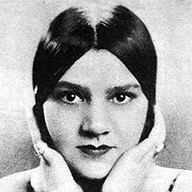
Up in the Clouds: A Betty Bolton Discography
This discography documents Betty Bolton’s 116 sound recordings (1929-1935).
by A. G. Kozak
 https://orcid.org/0000-0002-8307-9716
Version 1.1.0
(Updated: June 30, 2026)

© 2025–2026 A. G. Kozak. This work is licensed under a Creative Commons Attribution-NonCommercial-NoDerivatives 4.0 International License.
Download the PDF: 
Table of Contents
Introduction
In the course of just under six years (1929–1935), English singer Betty Bolton recorded 116 sides and thus established herself as a prolific recording artist by the standards of the interwar period. Bolton’s origins were in the musical comedies of the London stage, and record producers must have recognized her significant talent for making funny or risqué songs even more entertaining through her bold and idiosyncratic delivery. Yet she could also inject sincerity into a song that called for it, and her vocals can be incredibly touching, memorable, and beautiful.
I will reserve further questions of biography and artistic excellence for the rest of my Betty Bolton website. A discography should be simply a systematic account of facts and reasonable conjectures about artists’ known recordings, both extant and lost. It is worth making a few observations, however, about factors that complicate our identifying Betty Bolton records. It is particularly important to acknowledge some of the prior research that makes it possible for me to attempt as complete a list of her output as possible.
Bolton produced quite a few records that helpfully have the name “Betty Bolton” right on the label. However, like many artists of her time, she used two pseudonyms on the Eclipse label: “Miss Lydia Russell” and “Gracie Collins.” But both of these names were also used by other female artists on Eclipse, so firmly establishing that a given Lydia Russell or Gracie Collins record is a recording of Betty Bolton ultimately requires a copy of the record or a transfer—and a good ear.
Another major challenge is that Betty Bolton’s name usually does not appear on a record when the label features primarily the dance band for which she is providing the vocal chorus. So far, we know her to have recorded with:
- The Piccadilly Players (Al Starita dir.)
- Ray Starita and His Ambassadors Band
- The Four Bright Sparks (Van Phillips dir.)
- Roy Fox and His Band
- Spike Hughes and His Dance Orchestra
- Sid Phillips and His Melodians
- Jack Payne and His BBC Dance Orchestra
- Jay Wilbur and His Salon Orchestra (or “Jay Wilbur and His Band”; also known as The Radio Syncopators)
- Don Porto’s Novelty Accordion Band (also known as Primo Scala’s Accordion Band; Harry Bidgood dir.)
- Scott Wood and His Orchestra
The best source for identifying Bolton’s dance band vocals is, naturally, Rust and Forbes’s British Dance Bands on Record (1989). But that only covers part of her artistic output. Much of the rest of her career falls into the bailiwick of Ross Laird, whose magisterial 1996 Moanin’ Low provides discographies for all female Anglophone popular singers—but with an arbitrary cutoff date of 1933, which leaves out the last two years of Bolton’s career. For Betty Bolton, as for so many artists included in that book, Laird represents the single greatest step forward in research. It has, however, been nearly thirty years since Moanin’ Low was published, and in that time there has been great progress in the creation both of relevant label discographies and of internet resources that allow us to establish facts about records. It is especially worth mentioning the online label discographies of Mike Thomas, who provides up-to-date, complete, and correct discographies for all British labels not covered by more traditional sources. I particularly like his ethos of making vast bodies of knowledge available to the public in a format that is easily updated and thus evergreen.
For their assistance with the research for this discography, I would like to thank:
- Terry Brown
- Charles Hippisley-Cox
- Jonathan David Holmes
- Erin Kozak
- Steve Paget
- Ray Pallett
- Henry Parsons
- Mike Taylor
- David Weavings
A. G. Kozak
Berkeley, California
bettybolton.co.uk
January 26, 2025 (Betty Bolton’s 119th birthday)
(Introduction updated February 16, 2026, for version 1.0.5)
Reference List
- Adrian, Karlo, and Arthur Badrock. 1989. Edison Bell Winner Records. 2nd ed., rev. E. Bayly. (EBWR)
- Andrews, Frank. 1985. Columbia 10″ Records, 1904–30. City of London Phonograph and Gramophone Society. (FA-Col)
- Andrews, Frank, and Bill Dean-Myatt. 2014. The Imperial Records. CLPGS Reference Series No. 33. City of London Phonograph and Gramophone Society. (ADM-Imp)
- Andrews, Frank, Jim Hayes, and Michael Smith. 2003. Columbia ‘DB’ and ‘LB’ Series. City of London Phonograph and Gramophone Society. (DB)
- Andrews, Frank, et al. 2019. Vocalion Records. CLPGS Reference Series No. 42. 3rd ed. City of London Phonograph and Gramophone Society. (VR)
- Badrock, Arthur. 1994. “Gracie Collins.” Talking Machine Review 88 (Autumn/Winter): 2559–60. (AB)
- Badrock, Arthur, with Frank Andrews and Grant Pilcher. 1998. Filmophone Discography. Talking Machine Review. (BAP)
- Kozak, A. G. 2022. Croonette: An Elsie Carlisle Discography (version 2.1.0). Zenodo. (AGK-EC)
- Laird, Ross. 1996. Moanin’ Low: A Discography of Female Popular Vocal Recordings, 1920–1933. Greenwood Press. (ML)
- Rust, Brian. 2016. Jazz and Ragtime Records 1897–1942. 6th ed. Free Personal-Use Edition. Mainspring Press. (JRR)
- Rust, Brian, and Sandy Forbes. 1989. British Dance Bands on Record, 1911 to 1945, and Supplement. General Gramophone Publications Ltd. (BDBR)
- Smith, Michael. 2009. Decca Record Company, Ltd. Royal Blue and Gold ‘F’ Series 10 Inch 78 rpm Records. Volumes I and II. The Whitley Press. (MS-F)
- Thomas, Michael G. 2021. “Radio.” Mike Thomas’ Website. Last modified May 1, 2021. (MGT-EBR)
- Thomas, Michael G. 2023. “Columbia.” Mike Thomas’ Website. Last modified November 7, 2023. (MGT-Col)
- Thomas, Michael G. 2024a. “Eclipse8.” Mike Thomas’ Website. Last modified November 13, 2024. (MGT-Ecl)
- Thomas, Michael G. 2024b. “Filmophone.” Mike Thomas’ Website. Last modified October 2, 2024. (MGT-Film)
- Thomas, Michael G. 2024c. “Rex.” Mike Thomas’ Website. Last modified July 13, 2024. (MGT-Rex)
- Thomas, Michael G. 2024d. “Trusound.” Mike Thomas’ Website. Last modified December 15, 2024. (MGT-Trusound)
- Wright, John. 2021. “Len Fillis Discography.” r2ok! Last modified April 20, 2021. (JW)
Sources
| AB | Arthur Badrock. “Gracie Collins.” |
| ADM-Imp | Frank Andrews and Bill Dean-Myatt. The Imperial Records. |
| AGK | My collection. |
| AGK-EC | A. G. Kozak. Croonette: An Elsie Carlisle Discography. |
| BAP | Arthur Badrock, Frank Andrews, and Grant Pilcher. Filmophone Discography. |
| BDBR | Brian Rust and Sandy Forbes. British Dance Bands on Record, 1911 to 1945, and Supplement. |
| DB | Frank Andrews, Jim Hayes, and Michael Smith. Columbia ‘DB’ and ‘LB’ Series. |
| DW | The collection of David Weavings. |
| EBWR | Karlo Adrian and Arthur Badrock. Edison Bell Winner Records. |
| FA-Col | Frank Andrews. Columbia 10″ Records, 1904–30. |
| JDH | The collection of Jonathan David Holmes. |
| JRR | Brian Rust. Jazz and Ragtime Records 1897–1942. |
| JW | John Wright. “Len Fillis Discography.” |
| MGT-Col | Michael G. Thomas. “Columbia.” |
| MGT-EBR | Michael G. Thomas. “Radio.” |
| MGT-Ecl | Michael G. Thomas. “Eclipse8.” |
| MGT-Film | Michael G. Thomas. “Filmophone.” |
| MGT-Rex | Michael G. Thomas. “Rex.” |
| MGT-Trusound | Michael G. Thomas. “Trusound.” |
| ML | Ross Laird. Moanin’ Low. |
| MS-F | Michael Smith. Decca Record Company, Ltd. Royal Blue and Gold ‘F’ Series 10 Inch 78 rpm Records. |
| MT | The collection of Mike Taylor. |
| VR | Frank Andrews et al. Vocalion Records. |
Record Label Abbreviations
| Bcst | Broadcast |
| Col | Columbia |
| Dec | Decca |
| Ecl | Eclipse |
| EBR | Edison Bell Radio |
| EBW | Edison Bell Winner |
| Film | Filmophone |
| Imp | Imperial |
| Re | Regal |
| RZ | Regal Zonophone |
| Voc | Vocalion |
Two-Letter Country Abbreviations
| AU | Australia |
1929
Betty Bolton, contralto, with piano: Edward Cooper; and guitar: Len Fillis (also with celeste [-1]; with vibraphone [-2]). London, March 6, 1929.
| WA-8643-1 | Everything I do—I do for you (Sherman–Silver–Lewis) | Col 5366 | |
| WA-8647-2 | Evening star, help me to find my man (Turk–Ahlert) | Col 5320 | (-1) |
| WA-8648-2 | Ready for the river (Kahn–Moret) | Col 5320 | (-2) |
| WA-8649-1 | Me and the man in the moon (Leslie–Monaco) | Col 5366 |
I have confirmed that Bolton’s first matrix number is WA-8643, followed by WA-8647; two intervening matrices (WA-8645 and WA-8646 on Col 5384) consist of Terance Casey’s Wurlitzer organ music.
Edward Cooper and Len Fillis’s names are mentioned explicitly on the labels of Col 5366 but not 5320.
At the very beginning of “Evening star,” someone appears to be harmonizing with Bolton.
John Wright has “March 9, 1929” for this session (JW).
FA-Col, ML, JW, AGK
The Piccadilly Players, under the direction of Al Starita (as the Stellar Dance Band on Regal), with vocal chorus by Betty Bolton. London, March 9, 1929.
| WA-8674-2 | Up in the clouds (from The Five O’Clock Girl) (Kalmar–Ruby) | Col 5307, Re G-20471 (AU) | |
| WA-8675-2 | Happy go lucky bird (from The Five O’Clock Girl) (Kalmar–Ruby) | Col 5308, Col 01492 (AU) | |
| WA-8676-2 | Thinking of you (from The Five O’Clock Girl) (Kalmar–Ruby) | Col 5307, Re G-20471 (AU) | |
| WA-8677-2 | Who did? You did (from The Five O’Clock Girl) (Kalmar–Ruby) | Col 5308, Col 01492 (AU) |
FA-Col, BDBR, ML
Ray Starita and His Ambassadors Band, vocal chorus. London, March 22, 1929.
| WA-8738-2 | Second hand Rose (Clarke–Hanley) | Col 5361, Col 01566 (AU) | |
| WA-8739-2 | My man (Channing Pollock–Maurice Yvain) | Col 5361, Col 01566 (AU) | |
| WA-8740-1-2 | I was a Florodora baby (Ballard MacDonald–Harry Carroll) | Col unissued | |
| WA-8741-1-2 | Just an hour of adoration (Haven–Collins) | Col unissued |
FA-Col, BDBR, ML
The Piccadilly Players, under the direction of Al Starita, vocal chorus. London, April 13, 1929.
| WA-8591-4 | I found you “out” when I found you “in” somebody else’s arms (Charles O’Flynn–Phil Ponce) | Col 5357, Col 01568 (AU) | |
| WA-8593-3 | Lisette (Major–Andrew) | Col 5357, Col 01568 (AU) | |
| WA-8863-1 | I’m tickled to death I’m me (Butler–Evans) | Col 5372, Col 01567 (AU) | |
| WA-8864-1 | Bogey wail (A weird affair) (Wallace–Myers) | Col 5372, Col 01567 (AU) |
FA-Col, BDBR, ML
Ray Starita and His Ambassadors Band, vocal chorus. London, April 25, 1929.
| WA-8923-2 | All alone in Lover’s Lane (Rose–Nicholls) | Col 5376 | |
| WAX-4876-1 | “Thinking of you” (in “The Five O’Clock Girl – selection, part 1”) (Kalmar–Ruby) | Col 9715, Col 02886 (AU) | |
| WAX-4877-2 | “Up in the clouds” (in “The Five O’Clock Girl – selection, part 2”) (Kalmar–Ruby) | Col 9715, Col 02886 (AU) |
FA-Col, BDBR, ML
Ray Starita and His Ambassadors Band, vocal chorus. London, May 4, 1929.
| WA-8924-1 | My flame of love (Bryan–Nicholls) | Col 5376 | |
| WA-8950-2 | The wedding of the painted doll (A. Freed–N. H. Brown) | Col 5380 | |
| WA-8951-2 | Wake up! Chill’un, wake up! (J. Trent–W. Robison) | Col 5380, Col 01595 (AU) |
WA-8924-1 was originally scheduled to be recorded on April 25, 1929 (BDBR).
WA-8950-2 appears only on early pressings of Col 5380; later ones have a version of “The wedding of the painted doll” by Debroy Somers, with Tom Barratt as the vocalist (BDBR).
FA-Col, BDBR, ML
Betty Bolton, contralto, with piano, violin, and guitar (-1); with violin, clarinet, piano (plus guitar and vibraphone) (-2); with orchestra (-3). London, May 10, 1929.
| WA-9001-2 | I’m thirsty for kisses, hungry for love (from Why Be Good?) (Davis–Coots) | Col 5405 | (-1) |
| WA-9002-2 | It wasn’t meant to be (Steinberg–Endor–Benson) | Col 5405 | (-2) |
| WA-9003-2 | Peace of mind (Dyrenforth–Gibbons) | Col DB-18, Re G-20699 (AU) | (-3) |
John Wright tentatively identifies Len Fillis as the guitarist in (-1) and (-2) and lists “~May 12, 1929” as the session date (JW).
FA-Col, ML, DB, JW
Ray Starita and His Ambassadors Band (as The Rhythmic Troubadours on Regal), vocal chorus. London, May 31, 1929.
| WA-9072-1 | You’re the cream in my coffee (from Hold Everything) (de Sylva–Brown–Henderson) | Col 5423, Re G-20555 (AU) | |
| WA-9073-1 | To know you is to love you (from Hold Everything) (de Sylva–Brown–Henderson) | Col 5423, Re G-20555 (AU) |
FA-Col, BDBR, ML
The Piccadilly Players (as The Rhythmic Troubadours on Regal), under the direction of Al Starita, vocal chorus. London, June 1, 1929.
| WA-9076-1 | Jericho (from Syncopation) (Myers–Robin) | Col 5418, Re G-20532 (AU) | |
| WA-9079-1 | There’ll be you and I (from Mother’s Boy) (Green–Stept) | Col 5419, Col 01639 (AU) |
FA-Col, BDBR, ML
Ray Starita and His Ambassadors Band, vocal chorus. London, June 13, 1929.
| WA-9075-1 | Blue hills of Pasadena (Wallace–Herbert) | Col 5424 |
WA-9075-1 was originally scheduled to be recorded on May 31, 1929 (BDBR).
FA-Col, BDBR, ML
Betty Bolton, contralto, with novelty accompaniment. London, October 19, 1929.
| WA-9673-1 | Smiling Irish eyes (film Smiling Irish Eyes) (Ruby–Perkins) | Col 5613, Re G-20627 (AU) | |
| WA-9674-1 | Wishing and waiting for love (film Broadway Babies) (Clarke–Akst) | Col 5613, Re G-20653 (AU) |
WA-9675 (“When my dreams come true”) and WA-9676 (“Yet you forget!”) on Col 5614 are by Norah Blaney, not Betty Bolton.
FA-Col, ML
1930
Betty Bolton, contralto; at the piano: Edward Cooper. London, February 14, 1930.
| WA-10055-2 | Sentimental fool (Rose–David) | Col DB-33 | |
| WA-10056-1 | Sweet nothings of love (from Hot for Paris) (Leslie–Donaldson) | Col DB-33 | |
| WA-10057-2 | Dream lover (film The Love Parade) (Grey–Schertzinger) | Col DB-18, Re G-20699 (AU) |
ML, DB
The Four Bright Sparks (Van Phillips dir.). London, February 18, 1930.
| WA-10087-1-2 | Body and soul (Sour–Heyman–Eyton–Green) | Col rejected |
Take 4 was issued, with a vocal by Lou Abelardo (BDBR; ML).
BDBR, ML, JW
Betty Bolton, contralto; at the piano: Edward Cooper. London, April 2, 1930.
| WA-10231-2 | Reach out for a rainbow (film Mirth and Melody) (Conrad–Mitchell–Gottler) | Col DB-94 | |
| WA-10232-1 | Until love comes along (film Love Comes Along) (Clare–Levant) | Col DB-94 |
Laird has WA-10231-1 as the issued take (ML).
ML, DB
Betty Bolton, contralto, with Edward Cooper at the piano. London, May 8, 1930.
| WA-10362-2 | I like to do things for you (film King of Jazz) (Yellen–Ager) | Col DB-126 | |
| WA-10363-2 | A man of my own (film They Learned About Women) (Yellen–Ager) | Col DB-126 |
ML, DB, DW
The Four Bright Sparks (Van Phillips dir.) (with vocal chorus by Betty Bolton). London, August 27, 1930.
| WA-10609-1 | If your kisses can’t hold the man you love (Yellen–Ellis) | Col CB-124 |
BDBR, ML, JW
Betty Bolton, comedienne; with orchestra. London, October 14, 1930.
| GB-2055-1-2-3 | That’s where the South begins (Ted Shapiro) | Dec F-2010 | |
| GB-2056-1-2-3 | If your kisses can’t hold the man you love (Vivian Ellis–Jack Yellen) | Dec F-2010 |
ML, MS-F
Betty Bolton, vocal, with instrumental accompaniment. London, October 25, 1930.
| GB-2140-1-2 | What good am I without you? (Ager) | Dec F-2044 | |
| GB-2141-1-2-3 | What’s the use of living without love? (from Man Trouble) (James F. Hanley) | Dec F-2044 |
ML, MS-F, DW
Betty Bolton, comedienne; with instrumental accompaniment. London,November 4, 1930.
| GB-2181-1-2-3 | Okay, baby (Maceo Pinkard–William Tracey) | Dec F-2070 | |
| GB-2182-1-2 | Why am I so romantic? (Kalmar–Ruby) | Dec F-2070 |
Laird’s “De F2071” is a typographical error for Dec F-2020 (ML).
ML, MS-F
Betty Bolton, vocal, with instrumental accompaniment. London, November 18, 1930.
| GB-2296-1-2 | I’m wearing out my heart for you (Keyes–Layton) | Dec F-2137 | |
| GB-2297-1-2 | I’m yours (John W. Green–E. Y. Harburg) | Dec F-2137 |
ML, MS-F
Betty Bolton, vocal, with orchestral accompaniment. London, December 19, 1930.
| GB-2419-1-2 | I’ll be good because of you (Noble–Murray) | Dec rejected | |
| GB-2420-1-2-3 | Lancashire blues (Fields) | Dec F-2170 |
ML, MS-F
1931
Roy Fox (The Whispering Cornetist) and His Band, with vocal refrain by Betty Bolton. London, January 5, 1931.
| GB-2497-1-2-3 | Ten cents a dance (from Simple Simon) (Rodgers–Hart) | Dec F-2294 |
BDBR, ML, MS-F
Betty Bolton, vocal, with pianoforte accompaniment. London, January 20, 1931.
| GB-2419-3-4 | I’ll be good because of you (Noble–Murray) | Dec F-2170 | |
| GB-2529-1-2 | My handy man ain’t handy no more (from Lew Leslie’s Blackbirds of 1930) (Blake–Razaf) | Dec F-2254 | |
| GB-2530-1-2-3 | Makin’ wicky-wacky down in Waikiki (Hoffman–Lane) | Dec F-2254 |
Smith’s “GB1419” is a typographical error for GB-2419 (MS-F).
ML, MS-F, DW
Spike Hughes and His Dance Orchestra, vocal refrain. London, January 23, 1931.
| MB-1059-1-2-3 | Moanin’ low (Rainger–Dietz) | Dec F-2217 | |
| GB-2544-1-2-3 | Button up your overcoat (from Follow Through) (de Sylva–Brown–Henderson) | Dec F-2217 |
ML, JRR, MS-F
Betty Bolton, comedienne, with Reg. Casson at the piano. London, February 1931.
| L-0887 | Oh! How he looks at me (Leigh–Casson*) | Bcst 3027, Voc 838 | |
| L-0888 | Please Percy (Don’t do it now) (Beresford–Le Clerq) | Bcst 3027, Voc 838 |
*Reg. Casson is here playing one of his own compositions.
ML, VR
Betty Bolton, vocal, with orchestral accompaniment. London, c. March 1931.
| 13349-1 | Ten cents a dance (L. Hart–R. Rodgers) | EBW 5247 | |
| 13350-1 | I’m yours (Green–Harburg) | EBW 5247 |
EBWR, ML
Sid Phillips and His Melodians, vocal chorus. London, March 1931.
| 90101-1 | Clowning (Kurtz–Spitzhoff–Golden) | EBR 1486 | |
| 90102-2 | Blue again (D. Fields–J. McHugh) | EBR 1486 |
BDBR, ML, MGT-EBR
Jack Payne and His BBC Dance Orchestra. London, March 24, 1931.
| CA-11275-3-4 | Ten cents a dance (Hart–Rodgers) | Col rejected |
The issued takes were 1 and 2 (recorded on March 3, 1931) and 5 (recorded on March 31, 1931)—but in those takes the singer was Elsie Carlisle, not Betty Bolton (BDBR; ML; AGK-EC).
BDBR, ML, AGK-EC
Miss Lydia Russell, vocal (with piano accompaniment). London, April 11, 1931.
| JW-175-4 | You’re driving me crazy! (Walter Donaldson) | Ecl 38 |
Laird’s “JW176-4” is a typographical error for JW-175-4 (ML).
ML, MGT-Ecl
Jay Wilbur and His Salon Orchestra, vocal refrain. London, April 30, 1931.
| 5674-1-2 | “Because I love you” and “What’ll I do?” (in “Famous waltzes of the past – part 1”) (Irving Berlin) | Imp 2463 |
Laird lists only take 2 and has both “Because I love you” and “What’ll I do?” sung Betty Bolton ((ML))—quite possibly correctly—but Mike Taylor tells me that his take 1 has her singing only “What’ll I do?” with Jack Plant singing “Because I love you.”
BDBR, ML, ADM-Imp, MT
Betty Bolton, vocal, with orchestral accompaniment. London, c. May 1931.
| 13505-1 | It must be true (Arnheim–Clifford–Barris) | EBW 5300 | |
| 13506-1 | I surrender, dear (G. Clifford–H. Barris) | EBW 5300 |
EBWR, ML, DW
Bobbie Comber and Company (as Sammy Gay and Company on Rex), with chorus and orchestra. May 1931.
| L-01026-1 | “In the good old summer time” (in “A music hall show in grandpa’s day, humorous sketch, part 1”) | Bcst 3071, Rex 8096 | |
| L-01027-1 | “I can’t tell why I love you” (in “A music hall show in grandpa’s day, humorous sketch, part 2”) | Bcst 3071, Rex 8096 |
VR, MT
Jay Wilbur and His Salon Orchestra, vocal refrain. London, May 2, 1931.
| 5678-1-2 | “All alone” (in “Famous waltzes of the past – part 2”) (Irving Berlin) | Imp 2463 |
BDBR, ML, ADM-Imp, MT
Gracie Collins, vocal. London, May 11, 1931.
| JW-227-1-2 | Crying myself to sleep (Klenner–Wendling) | Ecl 68 | |
| JW-229-1 | You didn’t have to tell me (I knew it all the time) (Walter Donaldson) | Ecl 86 |
AB, ML, MGT-Ecl, DW
Gracie Collins, vocal (with orchestral accompaniment). London, May 26, 1931.
| JW-235-1-2 | Homesick blues (Raymond–Winston) | Ecl 50 |
AB, ML, MGT-Ecl
Jay Wilbur and His Band. London, June 3, 1931.
| 5710-1-2 | Ten cents a dance (Rodgers–Hart) | Imp 2484 |
BDBR, ML, ADM-Imp
Gracie Collins, vocal; with orchestra. London, June 26, 1931.
| JW-298-1-2 | Lonesome (Haslam–Grayson) | Ecl 68 |
AB, ML, MGT-Ecl
Gracie Collins, vocal (with orchestral accompaniment). London, July 20, 1931.
| JW-321-1-2 | Yearning for you (Kennedy–Winston) | Ecl 100 | |
| JW-322-1 | I want a man (Leslie Rome) | Ecl 86 | |
| JW-333-1-2 | If I had my time over again (Tinsley–Evans–Stanley) | Ecl 100 |
AB, ML, MGT-Ecl, DW
Betty Bolton, with piano. London, c. August 1931.
| F-1336-1-2 | Birds of a feather (McGowan–Moran) | Film 276 |
ML, MGT-Film
Betty Bolton, with piano. London, c. August 1931.
| F-1360-2 | Feeling the way I do | Film 276 |
ML, BAP, MGT-Film
Betty Bolton, vocal; vocal duet with Billy Scott-Coomber (with speaking by Jay Wilbur) (-1). London, c. September 1931.
| 5792-2 | I like a little girl like that (Yellen–Ager) | Imp 2552 | (-1) |
| 5793-4 | Just a dancing sweetheart (Tobias–de Rose) | Imp 2552 |
ML, ADM-Imp
Gracie Collins, vocal; with orchestra. London, September 2, 1931.
| JW-350-1-2-3 | Poor kid (Gilbert–Greer) | Ecl 98 | |
| JW-351-1-2 | Always return a smile (Hanley–Mills) | Ecl 98 |
AB, ML, MGT-Ecl
Betty Bolton, vocal, with piano accompaniment. London, c. October 1931.
| F-1518-? | I’ve done everything for you | Film 298 | |
| F-1519-? | [unknown title] | Film unissued | |
| F-1520-? | [unknown title] | Film unissued | |
| F-1521-? | Nevertheless (Kalmar–Ruby) | Film 298 |
Laird’s “Filmophone 278” is a typographical error for Film 298 (ML).
ML, BAP
Jay Wilbur and His Band as The Radio Syncopators. London, October 8, 1931.
| JW-389-1-2 | Just a dancing sweetheart (Tobias–DeRose) | Ecl 106 |
BDBR, ML, MGT-Ecl
Gracie Collins, vocal. London, October 27, 1931.
| JW-378-3-4-5 | You can’t stop me from loving you (Nichols–Holiner) | Ecl 115 |
AB, ML, MGT-Ecl
Betty Bolton, vocal, with orchestra. London, November 1931.
| 5885-2 | You can’t stop me from lovin’ you (Holiner–Nichols) | Imp 2598 | |
| 5886-1 | I want a man (Leslie Rome) | Imp 2598 |
ML, ADM-Imp, AGK
Betty Bolton (Ivor Dennis at the piano). London, November 1931.
| 5904-1-2 | My private affair (Johnson–Connor) | Imp 2622 | |
| 5905-2 | She jumped on her push bike (and pedalled away) (Wheldon) | Imp 2622 |
ML, ADM-Imp, AGK, MT
1932
Betty Bolton, vocal (with piano). London, February 1932.
| 5951-1 | The mocking bird went cuckoo (John Malvern) | Imp 2663 | |
| 5952-? | The party’s getting rough (Pat Aza) | Imp 2663 |
ML, ADM-Imp, JDH
Betty Bolton, vocal (with piano). London, February 1932.
| 6007-2 | The party’s getting rough (Pat Aza) | Imp 2663 |
ML, ADM-Imp
Betty Bolton, comedienne; with orchestra. London, June 1932.
| JW-746-? | I wonder why poor Nellie never writes? | Ecl 254 | |
| JW-747-2 | Don’t let him know too much | Ecl 254 |
Laird has “Don’t let them know too much” (ML); I am not yet sure which title is correct.
ML, MGT-Ecl
Betty Bolton, vocal (with orchestral accompaniment). With additional vocals by chorus (-1). London, September 1932.
| JW-837-2 | He’s dead – but he won’t lie down (Haines–Beresford–Harper) | Ecl 306 | (-1) |
| JW-838-2 | Don’t go any higher, Jeremiah (Haines–Harper) | Ecl 306 |
ML, MGT-Ecl
Betty Bolton, vocal (with orchestral accompaniment). Additional vocals by chorus (-1). London, November–December 1932.
| JW-946-1 | I’m a lady policeman (Raymond Wallace [pseud. Huntley Trevor]) | Ecl 333 | (-1) |
| JW-947-1 | I shan’t bring him home anymore (J. P. Long) | Ecl 333 |
ML, MGT-Ecl
1933
Betty Bolton, accompanied by Ivor Dennis on the piano. C. 1933.
| He did it while I waited | Levy’s unissued |
No matrix number was assigned to this recording, which was made privately by Levy’s of Aldgate. At least one pressing is known to survive; its reverse side, Imp mx. 6480 (“No Funny Business,” sung by Leslie Holmes), was recorded c. early October 1933. The song “He did it while I waited” is copyright 1932, so Mark Berresford’s suggested approximate date of 1933 seems reasonable.
JDH
Tarrant Bailey Junr. and his banjo, vocal chorus. May 16, 1933.
| 6398-2 | “Old Black Joe” (in “Old time selections – part 1”) (Stephen Foster) | Imp 2882 |
ADM-Imp, MT
Betty Bolton, with instrumental accompaniment. London, c. September 1933.
| 554-2 | Don’t blame me (Fields–McHugh) | Trusound A-1027 | |
| 555-3 | You’ve got everything (Kahn–Donaldson) | Trusound A-1027 |
Freddy Gardner (cl, as, bar) and others accompany (JRR).
ML, JRR, MGT-Trusound
Don Porto’s Novelty Accordion Band (Harry Bidgood dir.). December 1933.
| 1582-? | “Poor old Joe” (in “A plantation medley, part 1”) (Stephen Foster) | Ecl 646 |
The tune is more commonly known as “Old Black Joe” (see May 16, 1933).
MGT-Ecl
1934
Don Porto’s Novelty Accordion Band (Harry Bidgood dir.). C. January–February 1934.
| 1682-2 | “Old folks at home” (in “A plantation medley, part 2”) (Stephen Foster) | Ecl 646 |
MGT-Ecl
Scott Wood and His Orchestra, vocal chorus. London, January 4, 1934.
| CAR-2460-1 | You, or no one (Rothberg–Nicholls–Tinturin) | RZ MR-1192 | |
| CAR-2461-1 | You, or no one (Rothberg–Nicholls–Tinturin) | RZ rejected | |
| CAR-2462-1 | Little you know (Young–Ager–Schwartz) | RZ MR-1193 |
BDBR
Primo Scala’s Accordion Band, vocal chorus. Additional vocals by chorus. C. February 1934.
| F-730-1 | “Out in the cold, cold snow” (Haines–Harper) (in “Love, Life and Laughter, selection, part 2”) | Rex 8143 |
MGT-Rex, AGK
Betty Bolton. Additional vocals by chorus. March 1934.
| F-745-2 | Out in the cold, cold snow (film Love, Life and Laughter) (Haines–Harper) | Rex 8156 |
MGT-Rex, MT
1935
Betty Bolton, vocal. Mid-February 1935.
| 2349-1-2 | Don’t ’ang my ’Arry (Newman) | Ecl 906 | |
| 2350-2 | And how? (Long–Scott) | Ecl 906 |
MGT-Ecl, DW, AGK
Song Index
- All alone (Irving Berlin): May 2, 1931
- All alone in Lover’s Lane (Rose–Nicholls): April 25, 1929
- Always return a smile (Hanley–Mills): September 2, 1931
- And how? (Long–Scott): Mid-February 1935
- Because I love you (Irving Berlin): April 30, 1931
- Birds of a feather (McGowan–Moran): c. August 1931
- Blue again (D. Fields–J. McHugh): March 1931
- Blue hills of Pasadena (Wallace–Herbert): June 13, 1929
- Body and soul (Sour–Heyman–Eyton–Green): February 18, 1930
- Bogey wail (A weird affair) (Wallace–Myers): April 13, 1929
- Button up your overcoat (de Sylva–Brown–Henderson): January 23, 1931
- Clowning (Kurtz–Spitzhoff–Golden): March 1931
- Crying myself to sleep (Klenner–Wendling): May 11, 1931
- Don’t ’ang my ’Arry (Newman): Mid-February 1935
- Don’t blame me (Fields–McHugh): c. September 1933
- Don’t go any higher, Jeremiah (Haines–Harper): September 1932
- Don’t let him know too much: June 1932
- Dream lover (Grey–Schertzinger): February 14, 1930
- Evening star, help me to find my man (Turk–Ahlert): March 6, 1929
- Everything I do—I do for you (Sherman–Silver–Lewis): March 6, 1929
- Feeling the way I do: c. August 1931
- Happy go lucky bird (Kalmar–Ruby): March 9, 1929
- He did it while I waited: c. 1933
- He’s dead – but he won’t lie down (Haines–Beresford–Harper): September 1932
- Homesick blues (Raymond–Winston): May 26, 1931
- I can’t tell why I love you: May 1931
- I found you “out” when I found you “in” somebody else’s arms (Charles O’Flynn–Phil Ponce): April 13, 1929
- I like a little girl like that (Yellen–Ager): c. September 1931
- I like to do things for you (Yellen–Ager): May 8, 1930
- I shan’t bring him home anymore (J. P. Long): November–December 1932
- I surrender, dear (G. Clifford–H. Barris): c. May 1931
- I want a man (Leslie Rome): July 20, 1931, November 1931
- I was a Florodora baby (Ballard MacDonald–Harry Carroll): March 22, 1929
- I wonder why poor Nellie never writes?: June 1932
- If I had my time over again (Tinsley–Evans–Stanley): July 20, 1931
- If your kisses can’t hold the man you love (Yellen–Ellis): August 27, 1930, October 14, 1930
- I’ll be good because of you (Noble–Murray): December 19, 1930, January 20, 1931
- I’m a lady policeman (Raymond Wallace [pseud. Huntley Trevor]): November–December 1932
- I’m thirsty for kisses, hungry for love (Davis–Coots): May 10, 1929
- I’m tickled to death I’m me (Butler–Evans): April 13, 1929
- I’m wearing out my heart for you (Keyes–Layton): November 18, 1930
- I’m yours (Green–Harburg): November 18, 1930, c. March 1931
- In the good old summer time: May 1931
- It must be true (Arnheim–Clifford–Barris): c. May 1931
- It wasn’t meant to be (Steinberg–Endor–Benson): May 10, 1929
- I’ve done everything for you: c. October 1931
- Jericho (Myers–Robin): June 1, 1929
- Just a dancing sweetheart (Tobias–de Rose): c. September 1931, October 8, 1931
- Just an hour of adoration (Haven–Collins): March 22, 1929
- Lancashire blues (Fields): December 19, 1930
- Lisette (Major–Andrew): April 13, 1929
- Little you know (Young–Ager–Schwartz): January 4, 1934
- Lonesome (Haslam–Grayson): June 26, 1931
- Makin’ wicky-wacky down in Waikiki (Hoffman–Lane): January 20, 1931
- A man of my own (Yellen–Ager): May 8, 1930
- Me and the man in the moon (Leslie–Monaco): March 6, 1929
- Moanin’ low (Rainger–Dietz): January 23, 1931
- The mocking bird went cuckoo (John Malvern): February 1932
- My flame of love (Bryan–Nicholls): May 4, 1929
- My handy man ain’t handy no more (Blake–Razaf): January 20, 1931
- My man (Channing Pollock–Maurice Yvain): March 22, 1929
- My private affair (Johnson–Connor): November 1931
- Nevertheless (Kalmar–Ruby): c. October 1931
- Oh! How he looks at me (Leigh–Casson): February 1931
- Okay, baby (Maceo Pinkard–William Tracey): November 4, 1930
- Old Black Joe (Stephen Foster): May 16, 1933
- Old folks at home (Stephen Foster): c. January–February 1934
- Out in the cold, cold snow (film Love, Life and Laughter) (Haines–Harper): c. February 1934, March 1934
- The party’s getting rough (Pat Aza): February 1932 (1), February 1932 (2)
- Peace of mind (Dyrenforth–Gibbons): May 10, 1929
- Please Percy (Don’t do it now) (Beresford–Le Clerq): February 1931
- Poor kid (Gilbert–Greer): September 2, 1931
- Poor old Joe (Stephen Foster): December 1933
- Reach out for a rainbow (Conrad–Mitchell–Gottler): April 2, 1930
- Ready for the river (Kahn–Moret): March 6, 1929
- Second hand Rose (Clarke–Hanley): March 22, 1929
- Sentimental fool (Rose–David): February 14, 1930
- She jumped on her push bike (and pedalled away) (Wheldon): November 1931
- Smiling Irish eyes (Ruby–Perkins): October 19, 1929
- Sweet nothings of love (Leslie–Donaldson): February 14, 1930
- Ten cents a dance (L. Hart–R. Rodgers): January 5, 1931, c. March 1931, March 24, 1931, June 3, 1931
- That’s where the South begins (Ted Shapiro): October 14, 1930
- There’ll be you and I (Green–Stept): June 1, 1929
- Thinking of you (Kalmar–Ruby): March 9, 1929, April 25, 1929
- To know you is to love you (de Sylva–Brown–Henderson): May 31, 1929
- Until love comes along (Clare–Levant): April 2, 1930
- Up in the clouds (Kalmar–Ruby): March 9, 1929, April 25, 1929
- Wake up! Chill’un, wake up! (J. Trent–W. Robison): May 4, 1929
- The wedding of the painted doll (A. Freed–N. H. Brown): May 4, 1929
- What good am I without you? (Ager): October 25, 1930
- What’ll I do? (Irving Berlin): April 30, 1931
- What’s the use of living without love? (James F. Hanley): October 25, 1930
- Who did? You did (Kalmar–Ruby): March 9, 1929
- Why am I so romantic? (Kalmar–Ruby): November 4, 1930
- Wishing and waiting for love (Clarke–Akst): October 19, 1929
- Yearning for you (Kennedy–Winston): July 20, 1931
- You can’t stop me from loving you (Nichols–Holiner): October 27, 1931, November 1931
- You didn’t have to tell me (I knew it all the time) (Walter Donaldson): May 11, 1931
- You, or no one (Rothberg–Nicholls–Tinturin): January 4, 1934
- You’re driving me crazy! (Walter Donaldson): April 11, 1931
- You’re the cream in my coffee (de Sylva–Brown–Henderson): May 31, 1929
- You’ve got everything (Kahn–Donaldson): c. September 1933
Appendix: Conventions Used in This Discography
1. Session Headers
Capital letters represent band names and personal names that actually appear on the record labels, whereas mixed-case names do not appear on the labels and reflect research and aural evidence. Other information on the labels (e.g., “vocal chorus” or “with piano”) is provided in lowercase, with details not on the label (such as the name of an uncredited musical director) appearing in parentheses. Any information after the first period in a session header is entirely supplemental and will not be found on the record label. The tentative identification of a person is indicated by a question mark prepended to their name.
When an important detail (e.g., “with speaking by Jay Wilbur”) is true of one or more recordings made at a session, but not of all of them, the detail will be marked with a hyphen and a number in parentheses in the session header (e.g., “(-1)”) and also below in the individual song entries.
Locations are given when known; dates (exact or approximate) refer to the original recording session, not to issue dates.
As this is a vocalist discography, individual personnel of full-sized bands are not generally listed. Readers may consult Rust and Forbes (1989) for the personnel in dance band recordings. Solo accompanists and members of small ensembles are sometimes identified.
2. Tables
The tables that list the recordings made at every session provide:
- Matrix and take numbers: A matrix number identifies a record side and will be found on the shellac itself (often also on the label). A take number frequently also appears on the shellac; when it does not, discographers try to supply it from other sources (such as studio ledgers). Matrix numbers often involve a prefix followed by a number (e.g., “CA-15813”). Takes known to have been issued are underlined in this text (e.g., “CA-15813-1”), while those that are unknown are sometimes indicated with a question mark. I list every take mentioned by my sources, as well as any I have found on the records themselves.
- Song name and songwriter(s): Each song’s name is listed as it appears on the record. I include any extra information provided by record labels, such as the stage play or film origin of a title, in parentheses (in the format “from West End Musical,” “film Hollywood Movie”). Songwriters’ names are included as they are listed on the label; in rare cases I have quietly corrected a spelling error or added a known songwriter who was for some reason omitted from the label.
- Record label(s), catalogue number(s), etc.: For each known 78-rpm-era record pressed from a given matrix, I list the label name (using the abbreviations established by Rust and Forbes [1989]) and the catalogue number. Non-UK issues (so far, only Australian ones have surfaced) have a two-letter country code in parentheses. If no take of a matrix was ever issued, I mark the matrix “rejected” if a further attempt was made to record the song, and “unissued” if none was. Labels in italics are ones that I have yet to encounter; if you have them, please contact me to share your label scans or photographs.
3. Session Notes
Any further discussion of a session or of individual songs appears in italics below the session's table.
4. Source Abbreviations
Small, boldface codes are listed after every session to show relevant sources. I generally include all sources that mention any element of a session, not just those that I believe to be correct. I rely on the evidence of my own collection implicitly, but I mention it (thus: “AGK”) when evidence from a record in my collection affects my listing in a particularly noteworthy way.